A tortilla rarely looks like the most important part of a dish. It’s slim, easy to fold, and usually disappears beneath the filling. Even so, your choice of wrap can shape the nutritional balance of the finished meal.
Comparing tortilla calories involves something beyond finding the lowest energy figure. It’s whether the wrap offers the nutritional qualities, texture, and flexibility needed for the meals you actually eat.
Comparing Wrap Calories: A Closer Look
A quick search for “calories wrap tortilla” often brings up products with widely different nutritional values. Mission reports approximately 186 calories for a Wholemeal Wrap and around 125 for a Carb Balance wrap, showing the difference. These figures come from the manufacturer’s published nutritional information.
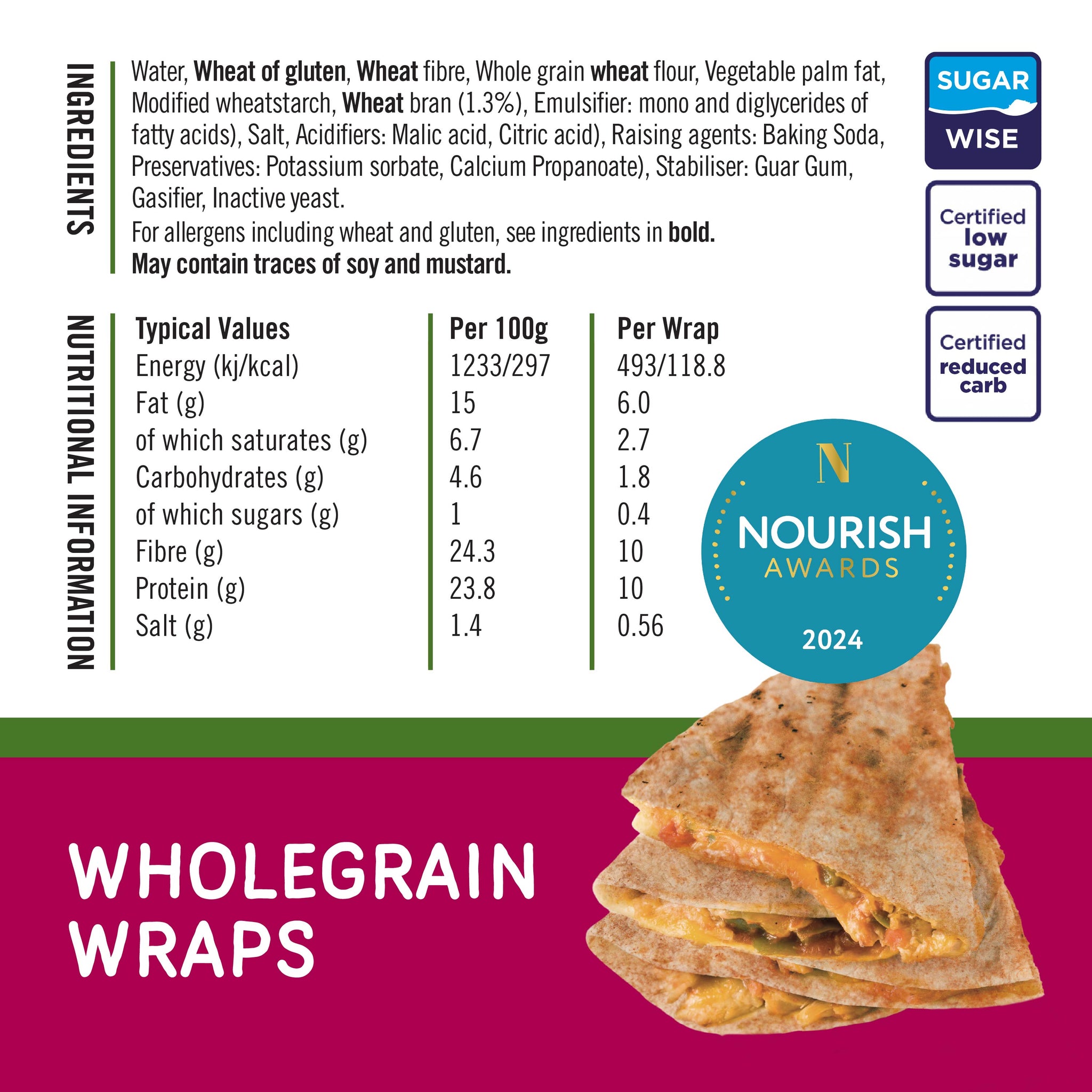
Image credit: fitbakes.co.uk
This example makes a case for looking at the individual tortilla, rather than relying on general assumptions. A tortilla’s appearance does not reveal its calorie count: nutritional composition can differ substantially between products. Lower carbohydrate content and lower calorie content do not always go together.
How a Different Tortilla Changes the Meal
Your usual wrap might contain grilled chicken, roasted peppers, fresh salad leaves, and a spoonful of yoghurt dressing. Now replace the conventional tortilla with a lower-carbohydrate alternative. You still have essentially the same lunch, although its nutritional profile is different.
Fitbakes Wholegrain Wraps are intended to let people adapt familiar meals. Fitbakes lists 2g carbohydrates, 10g protein, and 10g fibre for each wholegrain wrap.
These figures make the product relevant to people who are cutting back on carbs while still enjoying bread-based meals. Check the full product nutrition label instead of assuming an exact calorie value.
Protein and Fibre Serve Different Purposes
Although packaging may group them together, protein and fibre do different jobs. Protein supports normal tissue maintenance and repair. Fibre contributes to digestive health and may help make meals more satisfying. Because Fitbakes reports 10g protein and 10g fibre in each wrap, both nutrients deserve attention in a comparison.
The rest of the filling still matters when assessing the overall meal. A wrap filled with vegetables and a suitable protein source offers something different from one filled mainly with rich sauces.
A Better Way to Serve Your Wrap
Preparation may shape the final calorie content even when the wrap stays the same. Dry-toasting a filled wrap adds no cooking oil, whereas frying it in oil introduces more energy. The manufacturer recommends around 30 seconds of light toasting for its wholegrain wraps to bring out a malty flavour.
Warm the tortilla, then add spinach, grilled mushrooms, and a small amount of cheese for an uncomplicated meal. Another option is to turn the wrap itself into a thin flatbread with roasted vegetables, tomato, and herbs. These serving ideas keep preparation simple while giving you different ways to use the same wrap.
Why the Whole Meal Matters
It’s easy to spend time comparing tortilla labels while overlooking the fillings.
The calorie count of a serving also reflects dressings, cheese, spreads, and cooking fats. If you’re monitoring energy intake, consider the entire meal instead of treating the flatbread as an isolated ingredient.
If you’re following a low-carbohydrate diet, check the carbohydrate content of the filling as well. This approach gives you a clearer understanding of what you’re eating.
The Right Wrap Depends on Your Needs
When comparing a calories wrap tortilla, consider whether it suits the dishes you make, supports your nutrition goals, and tastes good. Fitbakes Wholegrain Wraps provide a plant-based, lower-carb alternative with manufacturer-reported protein and fibre content.
An informed choice starts with reviewing allergen information and ingredients, serving size, and the entire nutrition panel. The wrap itself showing the lowest number on the packet is not always the most useful choice. What matters is finding a flatbread wrap that supports the way you normally eat.