The advances in technology for banking have significantly automated bookkeeping. However those who deal with financial records understands that the automated system doesn’t always perform as expected. Clients still send statements in PDF format, feeds from banks aren’t working and historical transactions aren’t available. In the end, someone must transform a PDF document intended for reading into something that accounting software will actually use.
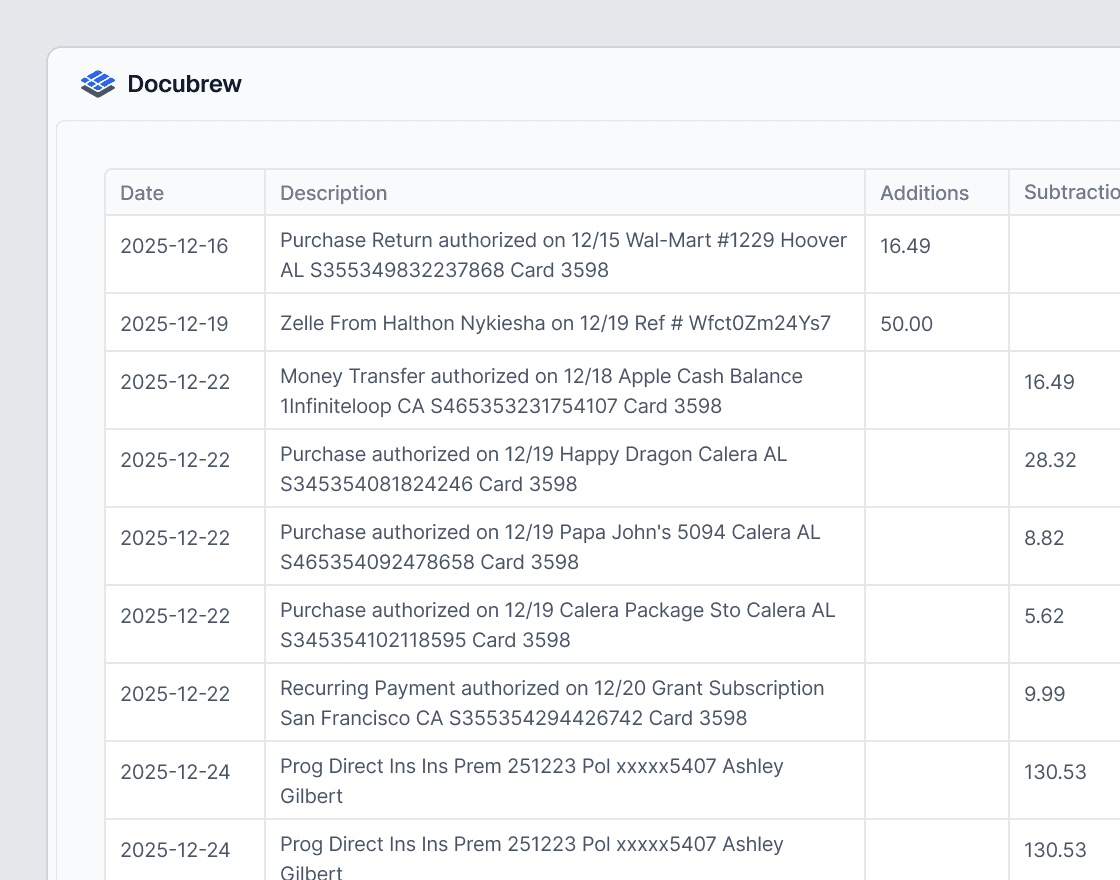
Image credit: docubrew.com
A bank statement converter can eliminate much of the repetitive work involved in that process. Docubrew instantly converts the data of your bank statement into structured spreadsheet information.
When a PDF becomes the missing piece
Imagine a bookkeeper making an annual reconciliation for an incoming client. The accounting system has recently completed transactions but some months are missing. The client downloaded the original PDF statements.
In the past, re-creating those months would require several hours of copying numbers into spreadsheets. The PDF bank statement to Excel workflow offers a more efficient alternative. Docubrew accepts digital PDFs and scans of paper statements, and extracts transaction data for use in spreadsheets.
Manual transcription that is less laborious can lower the chance of typing errors, which is an enormous benefit for professionals that need to transfer bank accounts regularly into Excel.
Keep the Pages That Matter
The bank statements aren’t just composed of transactions. A 12-page report could contain the cover page, account summary, disclosures or other notices as well as a variety of pages of actual transactions at the bank.
Docubrew allows users to preview the document and choose the relevant pages before conversion. It is much easier to convert bank statements accounts to Excel because the unrelated contents of the document are not included in your work dataset.
Once processed, the resulting file can be opened in Excel or created for use using accounting software such as QuickBooks, Xero, and FreshBooks.
CSV allows for a variety of accounting workflow
CSV is still a useful format since it’s extensively supported by spreadsheets and databases. Accounting applications also support CSV. If you need the bank statement in CSV, Docubrew produces structured output that is based on the transaction table found in the statement.
The same process is employed to transform bank statements into CSV to serve a variety of uses, including the reconstruction of old books, working on the task of cleaning up the client database that is not being used, analyzing missing transactions or preparing the information for reconciliation.
The batch processing process is particularly valuable for accounting firms processing multiple statements or clients simultaneously.
The financial documents you use should be protected by careful privacy controls
Processing financial records isn’t solely about the convenience. Bookkeeping and accounting professionals might be concerned about where they process the data because bank statements contain sensitive customer information.
Docubrew offers two options. Its Windows desktop application runs files locally on the user’s personal computer thus the files aren’t transferred to the cloud for conversion. If you prefer working with a browser choose the encrypted cloud version, where uploaded files are instantly deleted within 24 hours.
This choice differentiates the platform from the bank statement Excel software that depends exclusively on remote processing.
Turning Document Archives Back Into Working Data
The PDF statement is an excellent record, but it’s a hassle should you need to reconcile, sort filters, sort, or import transactions from another. Scanned documents can be problematic because the information about transactions may only exist in the form of an image.
Docubrew is a combination of statement parsing and OCR support for scanned documents, giving accountants, bookkeepers, and businesses a practical route from archived financial paperwork into usable transaction data.
This simple remedy can help speed up the efficiency of a lengthy process by keeping the original bank statement, while the transaction table is converted to data that you can use.